

Around 100 political parties in Mali have rejected the military juntas suspension of all political activity and vowed to reschedule a banned protest. The move comes amid growing anger over plans to extend the junta leaders rule by five years and dissolve all parties.
Malian authorities this week announced that all political parties and political organisations were suspended until further notice. They said the move was needed to preserve public order.
A broad coalition of parties had planned to protest the ban on Friday in Bamako, but the march was forbidden by a decree from transitional president General Assimi Gota. The decree cited the need to preserve public order.
In a statement released on Wednesday night andreceived by RFI, the coalition thanked supporters for their adherence to their ideals and objectives and for their exceptional mobilisation, but confirmed the protest was being postponed.
They said a new date would be announced soon.
alian authorities announced on Wednesday that all work by political parties and other political organisationshad been suspendeduntil further notice,citing the need to preserve public order.
The protest had been scheduled for Friday 9 May at the Independence Monument in Bamako.
The coalition also accused authorities of trying to sabotage the protest. They said false information was shared online about the time and location of the march, and that threats were made on social media. They condemned efforts at provoking violent clashes between Malians during the planned rally.
Protests had also been planned in the city of Sgou.
Ousmane Diallo, a Sahel researcher with Amnesty Internationals regional office for West and Central Africa,told RFIthe juntas decision violates the principles of freedom of association, freedom of peaceful assembly and also freedom of expression, which are guaranteed by the Malian constitution of 2023.
Mali forum backs five-year presidency for junta leader Assimi Gota
Growing protests
Anger has been growing since a national council of political actors recommended that Gota stay in power for another five years and that all political parties be dissolved.
Last weeks suspension of parties also applied to civil society groups and led to Malis biggest protest movement in years.
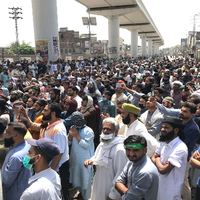
Opposition leaders and activists are now trying to build on momentum from large public rallies in Bamako on 3 and 4 May.
Several hundred people turned out, holding signs calling for multi-party elections and chanting: Down with dictatorship, long live democracy.
Ina statementon 30 April, Amnesty International said it was alarmed by proposals to dissolve political parties in Mali, warning this would amount to a serious attack on freedom of expression and association.
The group urged the authorities to stop what it called an escalating crackdown on civic space, and to respect the rights of all Malians, including critics, human rights defenders and opposition politicians.
Amnesty also pointed to the 2023 constitution, brought in by the transitional authorities, which guarantees the existence of political parties and their right to form and operate freely under the conditions determined by law.
Podcast: After Senegal's success, can Mali and Niger also hope for elections?
Political uncertainty
So far, there is no sign of a mass uprising. But Benedict Manzin, an analyst at strategic risk consultancySibylline, told Reuters that the coming days will be a key test.
People have been intimidated into silence, he said. But if protesters come out in larger numbers than last weekend, and if they are tear-gassed or arrested, it could result in an even stronger backlash.
Manzin also noted that several political opponents and government critics have disappeared from public view. One of them vanished on Thursday, his party said.
A real challenge to Malis military leaders is more likely to come from inside the regime, said Byron Cabrol, senior Africa analyst atDragonfly Intelligence, told Reuters.
A wave of protests would not be enough to kind of incentivise someone [within the military government] to take action, he said. But its undoubtedly a contributing factor, among many others.
Babacar Ndiaye, of theTimbuktu Institute, said the situation underscores the dangerous consequences of turning away from democratic principles and the rule of law, especially when legal bodies like theEcowasCourt of Justice exist to protect citizens rights.
(with Reuters)
Originally published on RFI