


For the first time, mental health is the focus of anofficial meetingof the General Assembly on Thursday, with world leaders expected to agree on a set of principles designed to drive global action to help alleviate the symptoms of those living with a complex variety of disorders.
More than 720,000 people commit suicide every year and many more attempt it. Now the head of the UNs World Health Organization (WHO) is calling for shifting the narrative on the issue to challenge harmful myths, reduce stigma and foster compassionate conversations.
The United Nations World Health Organization (WHO) today announced the attainment of a major target in the global fight againstleprosythanks to early diagnosis and free treatment in communities at risk.Although the subject of mental health has been raised in previous years, it will get top billing at the event, which will also cover the prevention and control of other noncommunicable diseases (NCDs), such as cardiovascular illnesses, cancer, diabetes and chronic respiratory diseases.
NCDs remain the leading causes of death and disability worldwide. They are closely connected: for many people, physical and mental conditions overlap, demanding integrated approaches to care.
The scale of the challenge
This is the first time that we can report more than one billion people have a mental health condition, Dr. Devora Kestel, Director of Noncommunicable Diseases and Mental Health/NMH at the World Health Organisation (WHO).
Only nine per cent of people with depression, the most common mental health condition, receive support. Only 40 per cent of people with psychosis receive help. This means then that countries need to come up with more and better ways to develop services to make sure that that care is available and easy to access.
Even where services do exist, they are often inaccessible due to costs, distance, or lack of integration with other health support. Stigma is also a significant factor dissuading those living with mental health from seeking help.
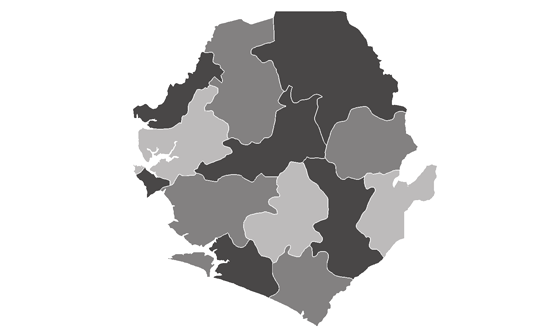
UNICEF/Michael DuffUNICEF are providing women in Sierra Leone with mental health counselling and psychosocial support.The Political Declaration due to be adopted at the meeting also aims to encourage knowledge sharing and expanded funding. Member States have decided to emphasise some issues that are common to all non-communicable diseases, but some that are very specific to mental health, like child and youth mental health, suicide prevention, and efforts to develop services at community level, Dr. Kestel noted.
Clear links between mental and physical illness
The spread of NCDs is largely driven by five main risk factors: tobacco use, harmful use of alcohol, insufficient physical activity, unhealthy diets, and air pollution. Limited access to diagnosis, treatment and care services also contributes significantly.
Risk factors between mental and physical illness overlap significantly, according to Dr. Kestel. The promotion of lifestyle interventions that encourage physical activity or a healthy diet, or cutting out tobacco and alcohol, are valid for both types of illnesses.
Now, she says, it is time for politicians to act. We have heard a lot about the importance of mental health over the last few years.
We need commitment. We need leaders to understand that there are issues, processes, mechanisms that can be put in place to ensure that there is going to be access to mental health care, from promoting healthy lifestyle to ensuring a person-centred approach to treatment and care with a clear role for people with lived experience.
The upcoming UN High-Level Meeting represents an opportunity to put mental health and NCDs firmly on the global agenda. The declaration will not be, as Dr. Kestel herself noted, a magic document, but it can set a new course, unite countries, and demonstrate that accessible and fair treatment is possible in every corner of the world.
UNICEF/Michael DuffUNICEF are providing women in Sierra Leone with mental health counselling and psychosocial support.Some of the priority directions identified in the draft declaration include:
Primary healthcare: ensuring access to basic services for prevention, diagnosis and treatment for everyone.
Essential medicines and health technologies: guaranteeing they are safe, effective and of high quality.
Sustainable financing, especially for low- and middle-income countries.
- Recognition of theshared risk factors and treatment needsbetween NCDs and mental health, while amplifying the voices of people living with these conditions.
Cross-sectoral cooperation: health depends not only on medicine but also on nutrition, environment, legislation, and economics.
- Tacklingexternal driverssuch as air pollution, unhealthy food marketing, tobacco promotion, and adverse social and economic conditions.
Raising awarenessworldwide