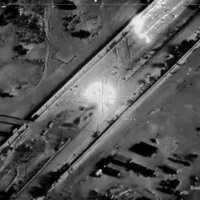



Several strategic towns and areas around the capital Bamako were targeted in the offensive by Tuareg rebels of the Azawad Liberation Front (FLA) coalition and the jihadist Group for the Support of Islam and Muslims (JNIM), which was launched at dawn on Saturday.
After two days ofintense fightingbetween Malian soldiers and the armed groups, Bamako and Kati, a garrison town and junta stronghold about 15 kilometres north of the capital, were quiet on Monday.
A government statement released late Sunday confirmed the death of Defence Minister Sadio Camara, who was killedin a car bomb attack on his home in Kati.
Mali has been mired in more than a decade of violence but analysts said the fresh attacks were the most serious challenge to its rulers since a March 2012 offensive that was repelled by the intervention of French forces, who have since left.
The nationwide spread and importance of the locations attacked point to a "coordinated attempt to seriously challenge state authority",says Heni Nsaibia, the SeniorWest AfricaAnalyst atACLED(Armed Conflict Location & Event Data).
"What stands out is not only the scale, but the deliberate selection of targets. Kati and Bamako are the heart of the regime, making any militant advances there particularly significant," he says, adding that the simultaneous attacks targeted other strategic locations such asMopti, Svar, Gao, Bourem, and Kidal.
Mali's defence minister Camara killed in rebel assault on residential compound
Mali 'in danger'
General Assimi Gota, who heads the junta whichseized power in 2020, has not been seen or made a public statement since the attacks.
A Malian security source has told French news agency AFP that he was in a safe place.
The opposition Coalition of Forces for the Republic (CFR), whose leader Imam Mahmoud Dicko is currently in exile in Algiers, said in a statement that Mali was "in danger".
The junta had "promised Malians security, stability and the return of the State" it said. But after the weekend offensive, "nobody could seriously claim that Mali was either pacified or secure", it added.
According totienne Fakaba Sissoko,academic and spokesperson for the Coalition, "the junta is disoriented".
"What is clear is that his silence demonstrates how disoriented he is, how disoriented the government is, and that the country is now adrift, in a state of utter desolation,"Sissoko told RFI's Christophe Boisbouvier.
"We don't know who is governing; we don't know who is in charge, who is making the decisions, and how it all works,"Sissoko says.
Why the Sahel is now the worlds deadliest region for terrorism
He also insists that there is a real risk of increased jihadist violence, insisting that "the junta must leave in order to open up new perspectives."
Sissoko says the transitional government'smilitary strategy is "flawed" and that apurely military approach hasn't yielded tangible results in recent years.
"Outsourcing the country's security to Russian mercenaries was a danger that needed to be avoided. We weren't listened to. And now, unfortunately, the consequences of the government's strategy are being felt on the ground."
He points out that [Defence Minister] Camara had worked to bring Wagner [Russian mercenaries] toMali. He had studied inRussiaand spoke Russian.
"He was also the main person responsible for the events of 21 May, 2021, when the second coup took place, therefore he was an important link in the junta's apparatus," Sissoko says.
Unstable situation
In another major blow to the junta, FLA rebels on Monday said they had "total" control of the key Tuareg stronghold ofKidalin the north.
They also said they had reached an "agreement" allowing Russian mercenaries from the Africa Corps paramilitaries (ex-Wagner Group) controlled by Moscow to withdraw from Kidal.
Wagner replaced in Mali by Africa Corps, another Russian military group
Kidal had been under the control of rebel groups for several decades before being retaken by the state in November 2023 after a Malian army offensive supported by fighters from Russia's Africa Corps.
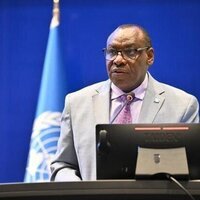
Meanwhile, the African Union (AU) Commission Chairperson Mahmoud Ali Youssouf has expressed "deep concern" over the attacks.
The chairperson is closely following security developments, and "strongly"condemnedthese acts, "which risk exposing civilian populations to significant harm."
Originally published on RFI